

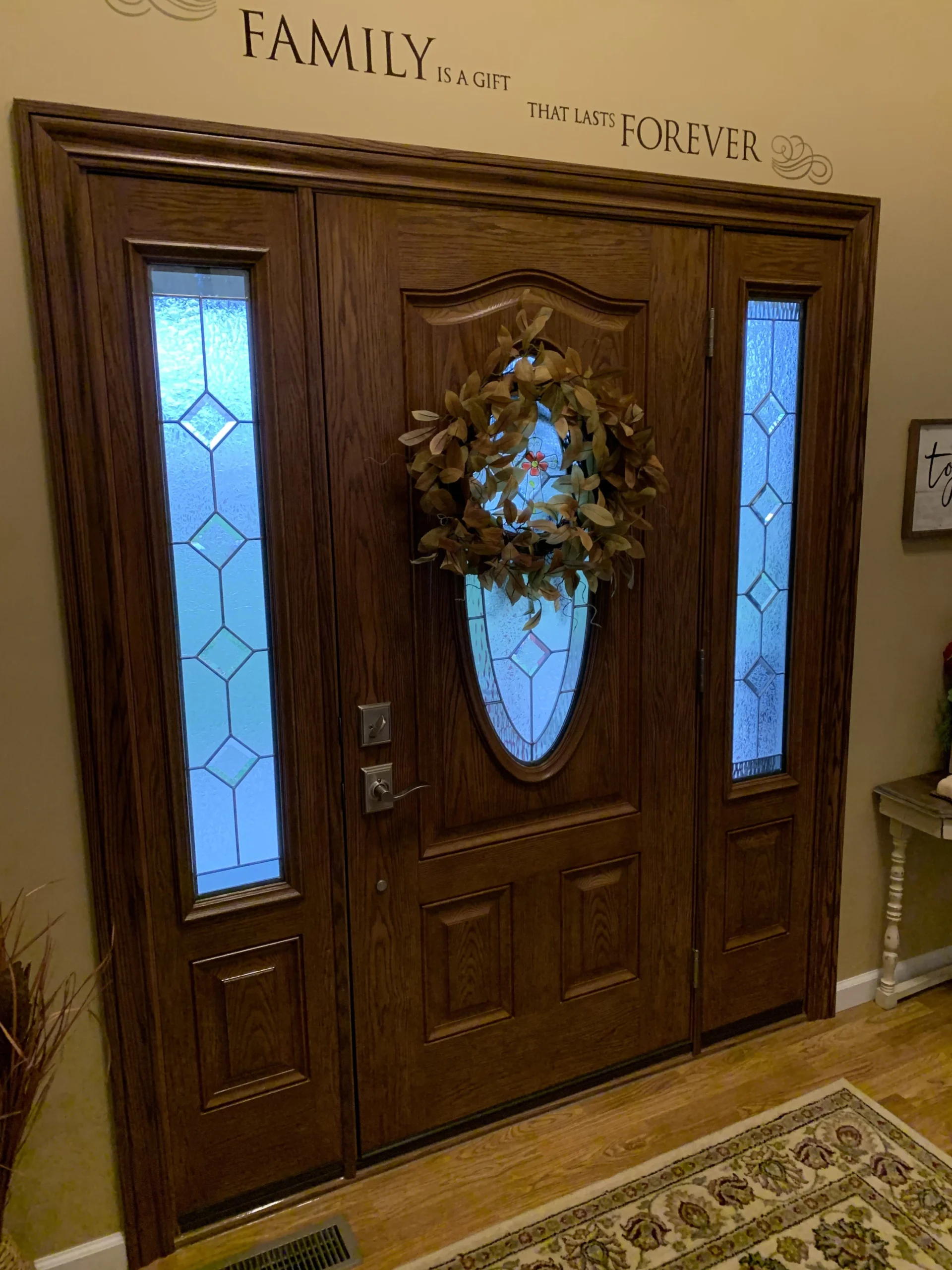
Is It Time for a Front Door Replacement?
If your front door sticks, leaks cold air, or simply looks tired, you’re not alone. Replacing a front door impacts security, energy efficiency, and curb appeal – three things every homeowner values in 2026. Modern replacement entry doors feature insulated cores, tighter weatherstripping, and hardware that far outperform doors installed before 2005.
This guide covers the signs you need a new front door, how steel doors, fiberglass doors, and wood compare, realistic cost ranges, and what to expect from the installation process. Whether you want to buy a budget-friendly steel slab or explore a custom made wood entryway, the information here will help you choose with confidence.
Table of Contents
- Signs You Need a New Front Door
- Front Door Materials: Steel, Fiberglass, and Wood Compared
- Front Door Replacement Costs in 2026
- Professional Door Replacement vs. DIY Installation
- Front Door Replacement Process: What Homeowners Can Expect
- Why Choose a Professional for Your Front Door Replacement
- Front Door FAQs
- Call to Action: Plan Your Front Door Replacement
Signs You Need a New Front Door
Catching early warning signs prevents rising energy bills and security gaps. Doors should have tight weatherstripping to stop drafts and improve insulation – when that seal fails, you’ll notice it on windy days and on your utility bill.
Replace your door if it starts to rot or rust. Faded or cracked doors may also need replacement, and doors that are difficult to open or close signal warping or frame damage. Look for these specific indicators:
- Drafts you can feel along the edges, or visible light around the frame at night
- Gaps wider than a quarter inch between the door and jamb
- Soft or rotted wood at the bottom rail
- Rust bleeding through a steel door’s finish
- Fogging between glass lites (failed insulated glazing)
- An old door with an outdated lock lacking a deadbolt or reinforced strike plate
- Peeling veneer on older entry doors past the 20–25 year mark
Minor issues like worn weatherstripping or loose hinges can sometimes be repaired. But when multiple problems appear together – warping, seal failure, security concerns – a full door replacement is the smarter long-term investment.
Front Door Materials: Steel, Fiberglass, and Wood Compared
Front doors come in various styles and configurations, but material choice determines the durability and maintenance level of a door more than any other factor. Weather exposure can also influence the choice of material and finish.
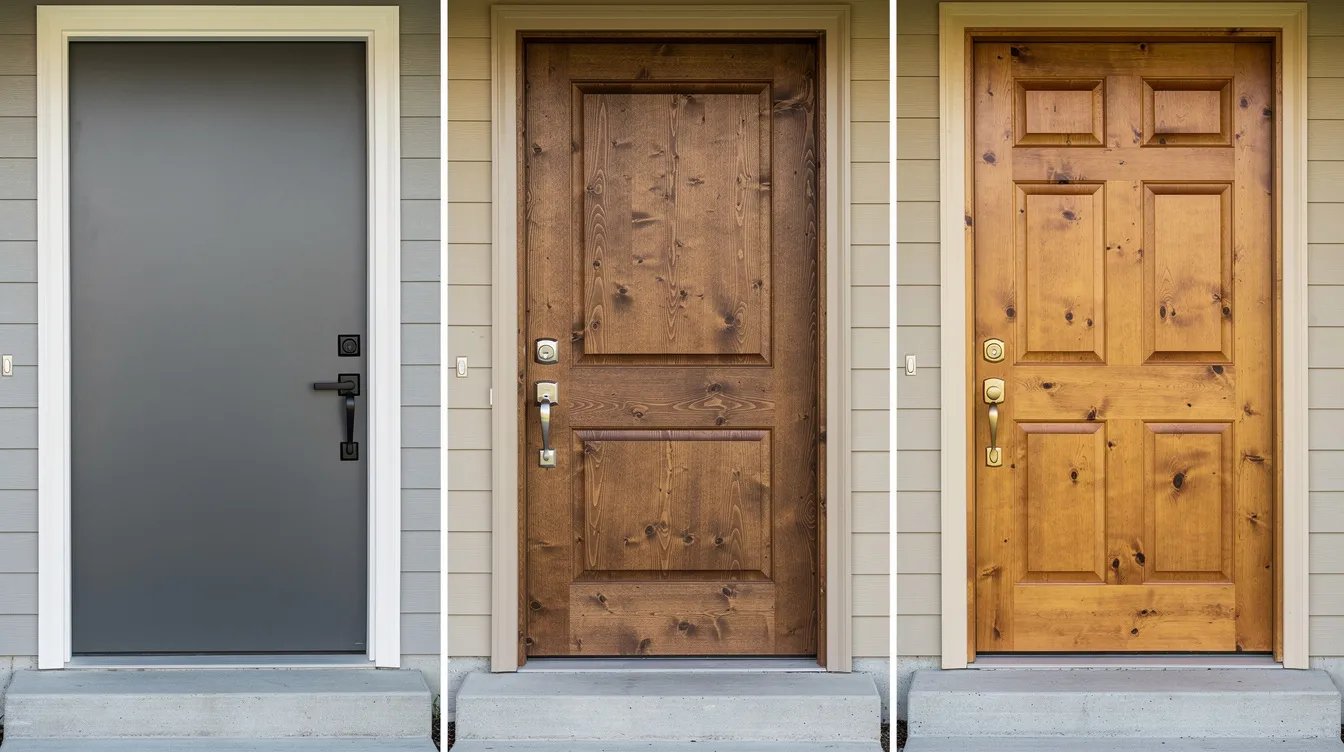
Steel doors are cost-effective but may rust over time, especially in coastal or humid climates. They offer the strongest resistance to forced entry at the lowest price point. Energy efficiency can be improved with proper insulation cores like polyurethane foam, and most steel slabs include them. High-quality deadbolts and reinforced strike plates enhance door security further. Security steel frames can cost between $850 to $1,500.
Fiberglass doors offer maintenance-free options for homeowners who want durability without ongoing upkeep. Fiberglass doors are maintenance-free and energy-efficient, with realistic woodgrain textures that rival real wood. Fiberglass doors often have wooden frames for added durability. A lower U-factor generally indicates better insulation for doors, and fiberglass consistently scores well here.
Wood doors provide traditional charm and aesthetic appeal, making them ideal for historic or higher-end homes. However, wood doors can rot if not properly maintained – expect to reseal or repaint every two to four years depending on sun and moisture exposure.
Entry doors can be customized with decorative glass options including clear, frosted, and Low-E insulated panels. Glass adds elegance and light but can reduce privacy and efficiency if not properly specified.
Quick-pick summary:
- Lowest cost: steel with minimal glass
- Lowest maintenance in challenging weather: fiberglass
- Traditional high-end look and aesthetics: wood
Typical lifespans: steel 20–30 years, fiberglass 25–35+ years, quality wood 25–30+ years. Front doors can last over 30 years with proper care.
Front Door Replacement Costs in 2026
The average cost of a new front door ranges from $1,800 to $5,000 installed, depending on materials, glass, and hardware. Door prices can range from $150 to $6,000 or more for the unit alone, while exterior doors typically cost a little more than $1,100 at the mid-range. Replacing a front door can cost around $800, excluding the door price, for labor and related work.
Example scenarios:
| Option | Estimated Installed Cost |
|---|---|
| Basic steel, no sidelights | $1,000–$2,000 |
| Mid-range fiberglass with decorative glass | $2,500–$4,500 |
| Solid wood, custom stain and glass | $4,000–$8,000+ |
| Key price drivers include the type of glass, sidelights or transoms, hardware grade, whether you’re replacing just the slab or a new frame and pre-hung unit, frame or threshold repair, and local labor rates. Get at least two itemized quotes specifying door brand, material, and scope of work. |
Professional Door Replacement vs. DIY Installation
DIY door replacement can work for experienced homeowners swapping a pre-hung door into a square, undamaged opening. For anything more complex – sidelights, structural changes, or an out-of-square frame – hire a professional.
A pre-hung door arrives with the frame, hinges, and threshold aligned for a perfect fit. A slab door is just the panel, requiring precise mortising for hinges and locksets. Measuring the door opening accurately is crucial for a proper fit regardless of approach.
Common DIY mistakes include mis-measuring the rough opening, failing to plumb the frame, skipping insulation around the jamb, and improperly flashing exterior trim. Proper installation is critical to a door’s performance and security.
- Choose DIY if: you have carpentry experience, proper tools, and a standard-size opening in good condition
- Hire a pro if: the frame is damaged, you’re adding glass or sidelights, or you want the manufacturer warranty to remain valid
Front Door Replacement Process: What Homeowners Can Expect
Most front door replacements wrap up in a single day. Here’s what the process looks like:
- Measure and select – A professional measures your existing entrance, discusses door styles, material options, swing direction, and security needs.
- Order and wait – Custom replacement entry doors typically have lead times of 3–8 weeks depending on manufacturer and configuration. Local requirements such as permits or HOA restrictions may apply for door replacement.
- Install and seal – The old door is safely removed, the rough opening inspected for rot or damage, and the new door shimmed, insulated, and sealed. Hardware is installed and tested.
- Inspect and enjoy – Hinges and latches are adjusted for smooth operation, weatherstripping is confirmed tight, and the installer walks you through care, operation, and warranty registration.
Cleanup and haul-away of the old door are typically included in the service.
Why Choose a Professional for Your Front Door Replacement
The best new door only performs as well as its installation. A certified installer ensures your home’s curb appeal, energy efficiency, and security all benefit from the upgrade.
Many manufacturers require professional installation for full warranty coverage on steel doors, fiberglass doors, and premium wood entry doors. Warranty coverage often includes a limited lifetime on the slab and 10–20 years on glass seals. A professional brings local knowledge – understanding which materials and finishes hold up in your specific climate, whether that means harsh winters, coastal salt air, or intense summer sun.
Before hiring, ask any contractor:
- Are you licensed and insured?
- Which door brands do you offer?
- Is the estimate itemized (door, hardware, labor, disposal)?
- What warranty covers both product and labor?
- Can you share photos of completed front door installations?
Evaluate companies on reviews, years in business, and transparency – not price alone.
Front Door FAQs
Below are answers to the most common questions homeowners ask about door replacement, materials, and cost.
What is the best material for my front door?
It depends on your priorities. Steel doors deliver the best value and security per dollar. Fiberglass doors are the top choice for low-maintenance durability and performance in a variety of climates. Wood is ideal if appearance and traditional elegance matter most – think historic homes or high-end renovations. For south-facing entries with strong sun, look for UV-resistant finishes on fiberglass or steel.
How long do front doors last?
Steel doors typically last 20–30 years, fiberglass 25–35+ years, and well-maintained wood 25–30+ years. Front doors can last 30 years with proper care. Direct sun, storm exposure, and neglected finishes shorten life. Check caulk and weatherstripping every one to two years and touch up paint or stain as needed.
How much does a new front door cost including installation?
For 2026, expect $1,000–$2,000 for a basic steel install, $2,500–$4,500 for mid-range fiberglass, and $4,000–$8,000+ for premium wood. Decorative glass, smart locks, and custom colors push the price higher. Always request itemized quotes to compare options side by side.
Can I replace my front door without replacing the frame?
Yes – if your existing frame is straight, solid, and rot-free, a slab-only replacement can save time and cost. If the frame is damaged, out of square, or leaking air, replacing the entire pre-hung unit with a new frame is the better move. Most modern energy-efficient replacement entry doors are sold pre-hung to ensure proper sealing.
Are fiberglass doors better than steel doors?
Fiberglass wins on dent resistance, maintenance, and realistic wood appearance. Steel wins on initial price and forced-entry resistance. Both deliver strong energy efficiency with insulated cores and tight weatherstripping. Choose fiberglass if you want a find-it-and-forget-it door that mimics wood. Choose steel if budget and security are top of mind.
How do I choose the right size and style for my new front door?
Measure width, height, and thickness of both the door and the rough opening. Consider whether a single door, double door, or a door with sidelights and a transom best fits your house and entryway. Explore style options – modern, Craftsman, traditional panel – and coordinate with your existing trim. Working with a professional to confirm measurements avoids costly mistakes, especially if you’re changing the opening size.
Plan Your Front Door Replacement
A new front door is one of the easiest ways to bring together better security, improved energy efficiency, and a stronger first impression – all in a single upgrade. If your current door is drafty, difficult to open, or showing its age, today is the right time to take action.
Contact a door replacement professional in Central Indiana to schedule a consultation, compare steel, fiberglass, and wood options, and get a detailed estimate tailored to your home. A quick phone call or online form is all it takes to get started.